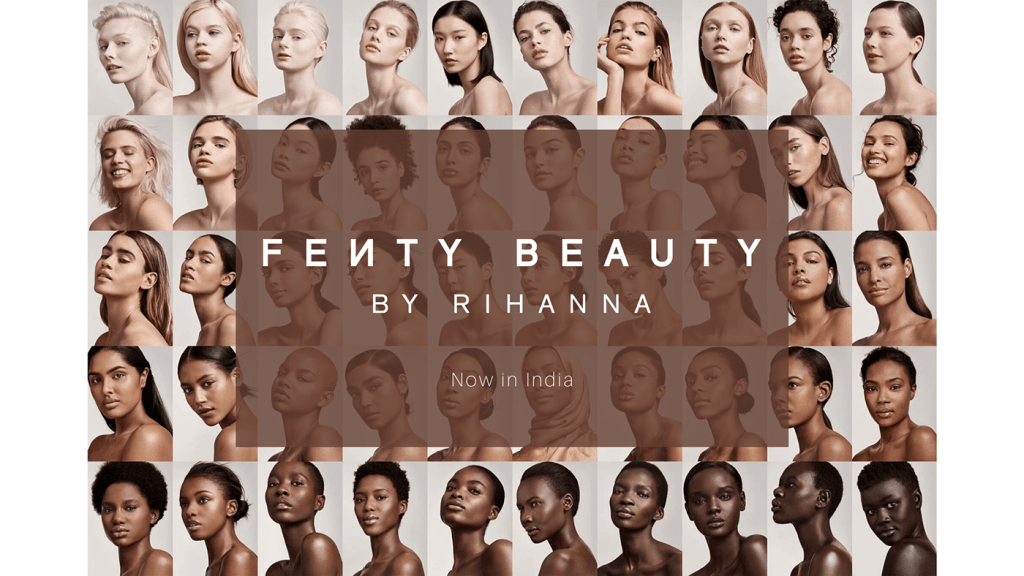
Fenty Beauty’s ongoing shade expansion campaign is one of the most meaningful beauty campaigns of the past two years, especially because it puts representation at the center of every decision. The brand already made history when it launched with forty foundation shades, but this campaign added even more options to help everyone feel included and excited about shopping for makeup. The goal of the campaign is to make beauty accessible to all skin tones and undertones while strengthening the brand’s identity as a leader in inclusivity. The target audience is mostly Gen Z and Millennial beauty lovers who care about diversity and use social platforms to guide their purchasing decisions. Because this audience loves creators and authentic content, Fenty Beauty focuses heavily on TikTok, Instagram, and YouTube for awareness and storytelling.
The campaign used a strong mix of digital strategies to build awareness and drive actual sales. Social media was the main driver, especially TikTok tutorials and Get Ready With Me videos where creators with different skin tones showed how well their shade matched. This helped people picture themselves using the product before even trying it. They also used paid advertising across platforms like Meta and TikTok to reach new users online who maybe did not follow the brand yet but had shown interest in beauty content. Many of the videos used quick comparisons and real skin texture to boost trust and reduce hesitation for first time buyers.
Conversion rate optimization also played a huge role. On the website, the Shade Finder quiz makes the shopping experience feel more personal and almost like having a makeup artist help you pick. The brand also improved its SEO by ranking well for searches like best foundation for oily skin and inclusive shade range which brings in new shoppers who are actively searching for solutions. The brand uses retargeting ads to remind shoppers of products they looked at or added to their cart. This helps guide them back if they were unsure the first time. Their loyalty program is another tool that nurtures leads by rewarding returning customers with points which keeps the excitement going.
Overall, the campaign connects well with what we have learned in class about awareness, interest and conversion. I think the strongest part of this campaign is how real it feels. Seeing a huge range of real people wearing the foundation builds trust way more than a traditional beauty ad that only shows one skin tone or one look. The buzz on TikTok also helped the brand stay top of mind because people love sharing when they finally find a perfect shade match. I think the only real improvement would be adding even more AR try on technology since people shopping online sometimes worry that a shade will still look different in person. It would also be helpful to include more long form educational content on their website for makeup beginners who may feel overwhelmed with so many choices. Still the positives definitely outweigh any weaknesses and the results show that inclusivity drives loyalty and purchase intent.
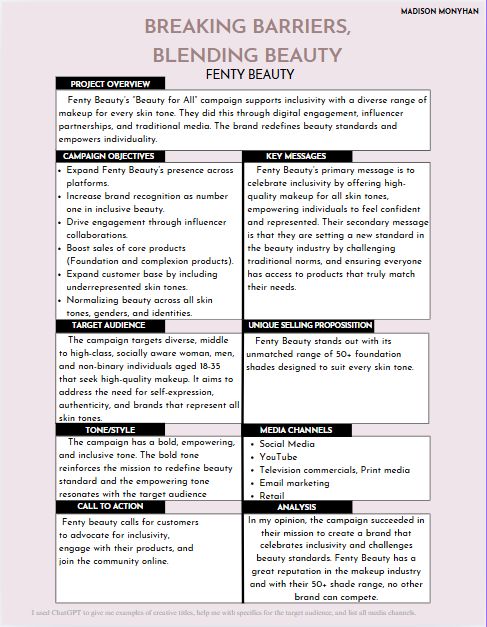
This campaign deepened my understanding of digital media and advertising because it proves that strategy and creativity have to work together to get real results. I liked seeing how UX and CRO were just as important as the creative content itself. When brands remove friction and speak directly to what people care about they build true community. That is something I want to carry into my future as a marketer especially in the beauty industry. Representation is not only the right thing to do it is also something people genuinely want from the brands they support. I also created a creative brief for this campaign in one of my other classes that I wanted to share.


Leave a Reply